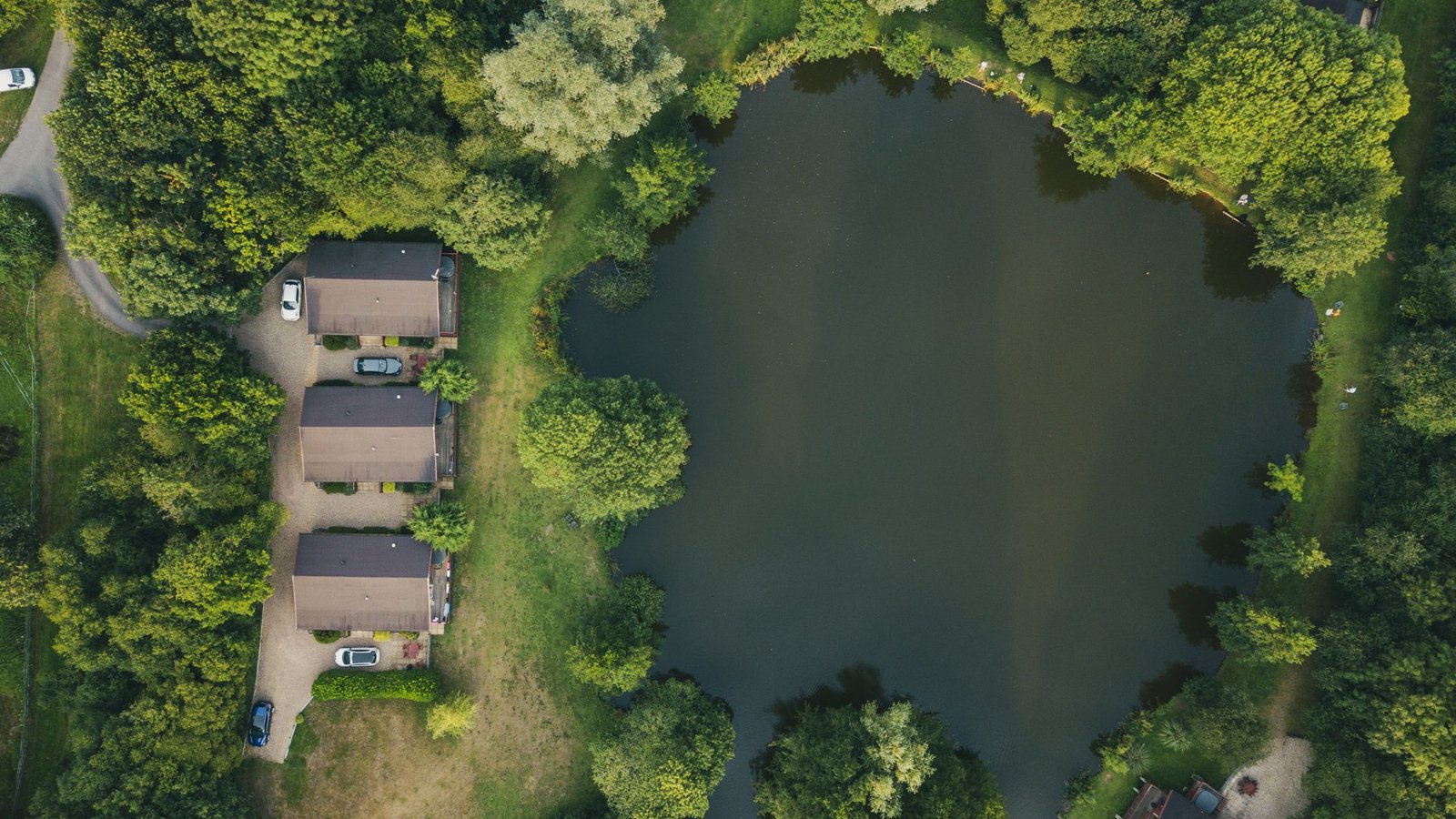
Imagine you want to buy a house in the countryside and find one in a place full of trees and surrounded by mountains. You request information from the seller and the corresponding town hall and discover that the house is out of planning regulations. You might have questions: What does it mean? Can a property out of planning regulations be registered? Is it possible to get a mortgage for that house? In this article, we answer all those questions.
What is a property out of planning regulations?
A property is considered out of planning regulations when it is a construction, building, or facility that does not comply with current urban planning regulations (the urban development plan).
This affects the property’s value and its potential resale in the future.
In what cases does a property become out of planning regulations?
This type of situation mainly occurs in two cases:
– A building was legally constructed a long time ago, but due to changes in regulations, it no longer meets urban planning requirements and is now out of planning regulations. For example, this could be the case of a building legally built in the 1970s, but after a new revision of the General Urban Development Plan (PGOU), it no longer complies with regulations because the area where it is located has been reclassified as a green zone.
– A building was constructed without a permit in the 1990s, meaning it has never complied with urban planning laws. For example, this could be the case of a house built without a permit on protected rural land. The property remains out of planning regulations and can be used, but with restrictions.
How can I check if a property is out of planning regulations?
If you have found a house you like and want to make sure it complies with urban planning regulations, you will need to request urban planning information from the municipality where the house is located.
You can request an urban planning certificate that details whether the house complies with the General Urban Development Plan (PGOU) of each municipality. Through the town hall, you can also find out what types of modifications are allowed for the property if it is out of planning regulations.
Can I register a property that is out of planning regulations?
The answer is yes, but it is very important to understand that there are limitations that may influence your decision to buy a property that is out of planning regulations. These limitations include:
– You will not be able to carry out renovations or modifications that increase its economic value.
– The building cannot be reconstructed, even if it suffers major damage. In other words, if it is demolished or severely deteriorated, it cannot be rebuilt.
– Only essential repairs are allowed to ensure the property’s habitability or to support an ongoing activity. It is also possible to carry out work to remove architectural barriers, such as building ramps or installing an elevator.
– You could face fines or even be required to demolish the property in the future.
How can a property out of planning regulations be legalized?
If you want to legalize the urban planning status of a property that is out of planning regulations, you will need to consider several factors:
– The applicable current regulations.
– The type of urban planning violation that was committed.
– The location of the property.
Basically, there are two ways to address the situation:
– Request the legalization of the property from the relevant town hall. This may involve meeting new requirements and applying for new permits. In some cases, it may even require changes to the urban planning framework.
It is also important to know that legalization is not always possible. For example, if a house has been built on protected land, it cannot be legalized.
To request legalization, the following requirements generally must be met:
– The property must comply with the habitability conditions established by the applicable regulations, including basic facilities, lighting, and ventilation, among others.
– Not affected by public use easements. For example, the house cannot be located on a public road.
– Not built on public domain land (such as parks or community-use spaces).
– Comply with urban planning regulations, for example: maximum building height, permitted use, or restrictions imposed by local regulations.
– The legal figure of Asimilado Fuera de Ordenación (AFO). This applies to properties that do not comply with regulations but are not subject to an immediate demolition order. In this case, partial regularisation is permitted, allowing the owner to access water, electricity, and sanitation services.
To apply for AFO classification, it is necessary to check the regulations of each municipality. However, in general, compliance with requirements such as the following will be requested:
– Proof that the property has been in use in recent years.
– Proof that there is no risk of demolition.
– Payment of fees.
Can I apply for a mortgage?
You can apply, but for the bank, it represents a higher risk, so they may not grant it or may impose stricter conditions:
– Reducing the valuation and, therefore, the amount loaned.
– Increasing the interest rates on the mortgage.
– Requesting additional guarantees.
Issues to consider when a property is outside planning regulations
We have already seen some consequences of a property being classified as outside planning regulations in terms of regularisation and the ability to request information. However, additional complications may also arise, such as the following:
– The number of potential buyers decreases or disappears, as no one wants to purchase a property with legal issues.
– It will be difficult for an insurance company to cover the property, and if they do, it will be under particularly strict conditions.
– You could face fines or even a demolition order.
Other cases of non-compliance with urban planning regulations
In addition to the cases mentioned above, there are other situations that also involve non-compliance with urban planning regulations:
Properties in an irregular situation
An irregular property is not the same as a property outside planning regulations. For example, if you own a house and build an extension to add an extra room, it may be possible to regularise the situation. If so, you will need to apply for the relevant permit and comply with all the urban planning requirements of the municipality where the property is located.
Illegal property
This refers to, for example, a house built in a protected natural park. It is an illegal property that cannot be regularised. In this case, sanctions may be imposed, or demolition may be ordered.
Listed or protected properties
These are buildings with cultural, historical, or architectural value and are regulated by specific laws for their protection. They are legal, but there are significant restrictions on carrying out works or modifications.
As a result of all the above, when a property is outside planning regulations, it is essential to proceed with caution and seek the help of real estate advisors who can assist in gathering information and informing you about the consequences. At Proddigia, we are experts in property sales and can guide you through these situations, whether you are a property owner or a buyer. Do not hesitate to contact us to resolve any questions.